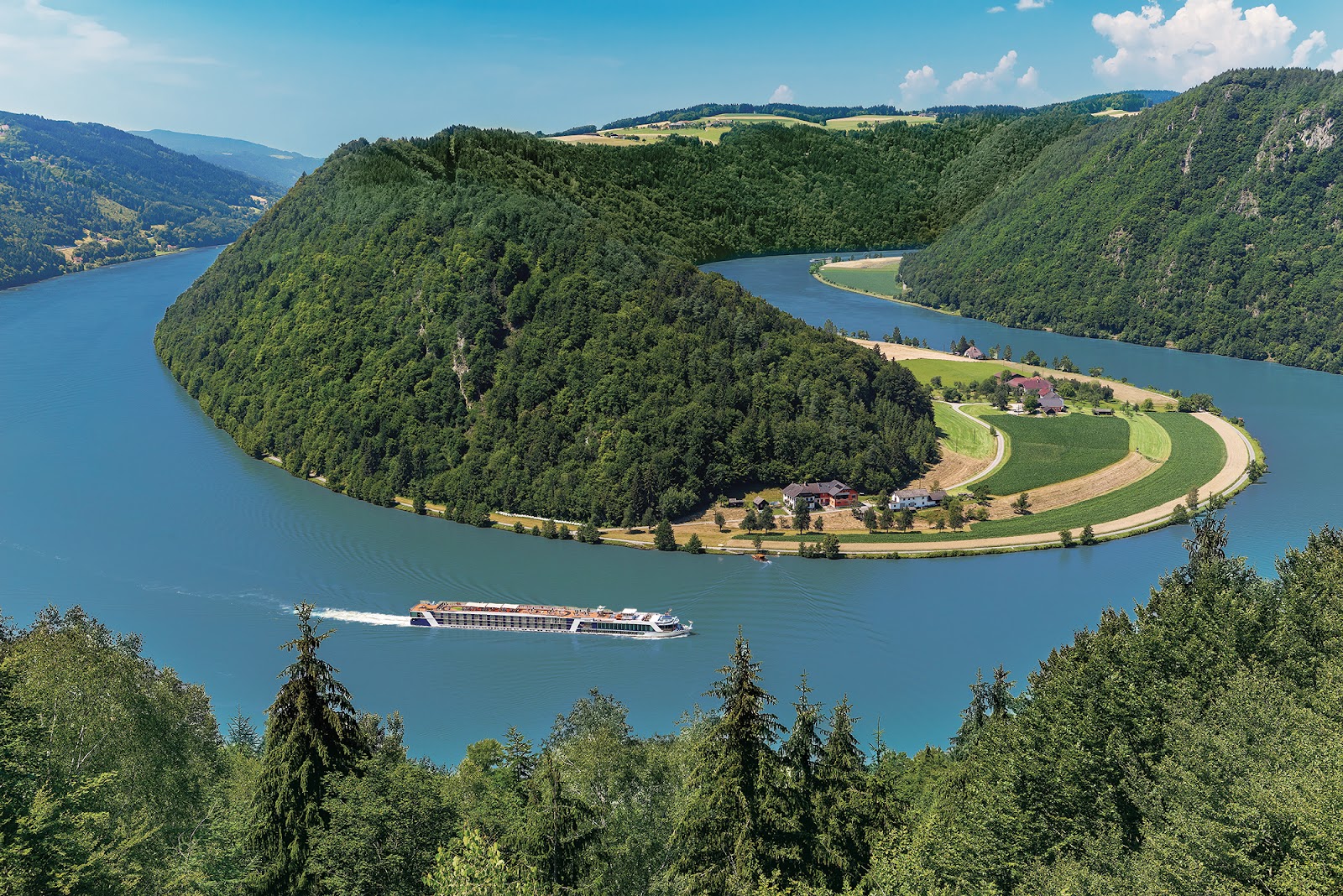
A Danube river cruise sails through the heart of Central Europe’s old empire — linking baroque Passau to grand Budapest, with Vienna, the Wachau Valley, and Bratislava in between. If the Rhine is Europe’s river of castles, the Danube is its river of capital cities: a week of palaces, music, and thermal baths along the continent’s second-longest river.
Quick answer: Danube cruises run the classic Passau–Budapest route in either direction over 7 nights, crossing Germany, Austria, Slovakia, and Hungary. Every major line sails it — Viking, AmaWaterways, Uniworld, Scenic, Avalon, Emerald, and more. The scenic highlight is Austria’s Wachau Valley, and the star cities are Vienna and Budapest. Sail April–October, or late November–December for the Christmas markets.
What Is a Danube River Cruise?
The Danube is Europe’s second-longest river, flowing some 2,850 kilometres from Germany’s Black Forest to the Black Sea and passing through or beside ten countries — more than any river on earth. The classic cruise, though, focuses on its most beautiful and storied stretch: the Upper and Middle Danube between Passau, Germany and Budapest, Hungary, taking in six cities across four countries in a single week.
Along with the Rhine, the Danube is one of the two headline rivers of European cruising — and it’s the one to choose if you’re drawn to great cities, imperial history, and classical music as much as scenery. New to river cruising? Our River Cruise 101 guide explains how it all works; this page is all about the Danube.
Why Cruise the Danube?
The Danube’s appeal is different from the castle-lined Rhine. Here’s what draws people:
- Two of Europe’s greatest capitals. Vienna and Budapest are the twin stars — and the ship docks right in the heart of both.
- Living history. This was the spine of the Habsburg empire, and it shows in the palaces, cathedrals, and coffee houses.
- The Wachau Valley. A UNESCO-listed stretch of vineyards, apricot orchards, and hilltop abbeys — the Danube’s scenic centerpiece.
- The music. Vienna is the city of Mozart, Beethoven, and Strauss; many sailings include a classical concert.
- World-class Christmas markets. In December the Danube rivals the Rhine for holiday-market sailings, with Vienna and Budapest among Europe’s finest.
The Classic Danube River Cruise Itinerary
The signature Danube voyage is 7 nights between Passau and Budapest, sailed in either direction. A typical week looks like this:
- Passau, Germany — a baroque “City of Three Rivers” where the Danube, Inn, and Ilz meet, crowned by St. Stephen’s Cathedral and its enormous pipe organ.
- Regensburg — many itineraries also call at this beautifully preserved medieval UNESCO city, one of Germany’s oldest.
- The Wachau Valley & Melk — the scenic highlight (more below), anchored by the golden Benedictine abbey at Melk and the wine village of Dürnstein.
- Vienna, Austria — the imperial capital of palaces, music, and coffee houses; usually an overnight so you can enjoy an evening concert.
- Bratislava, Slovakia — a compact, walkable old town crowned by a hilltop castle, and an easy half-day stop.
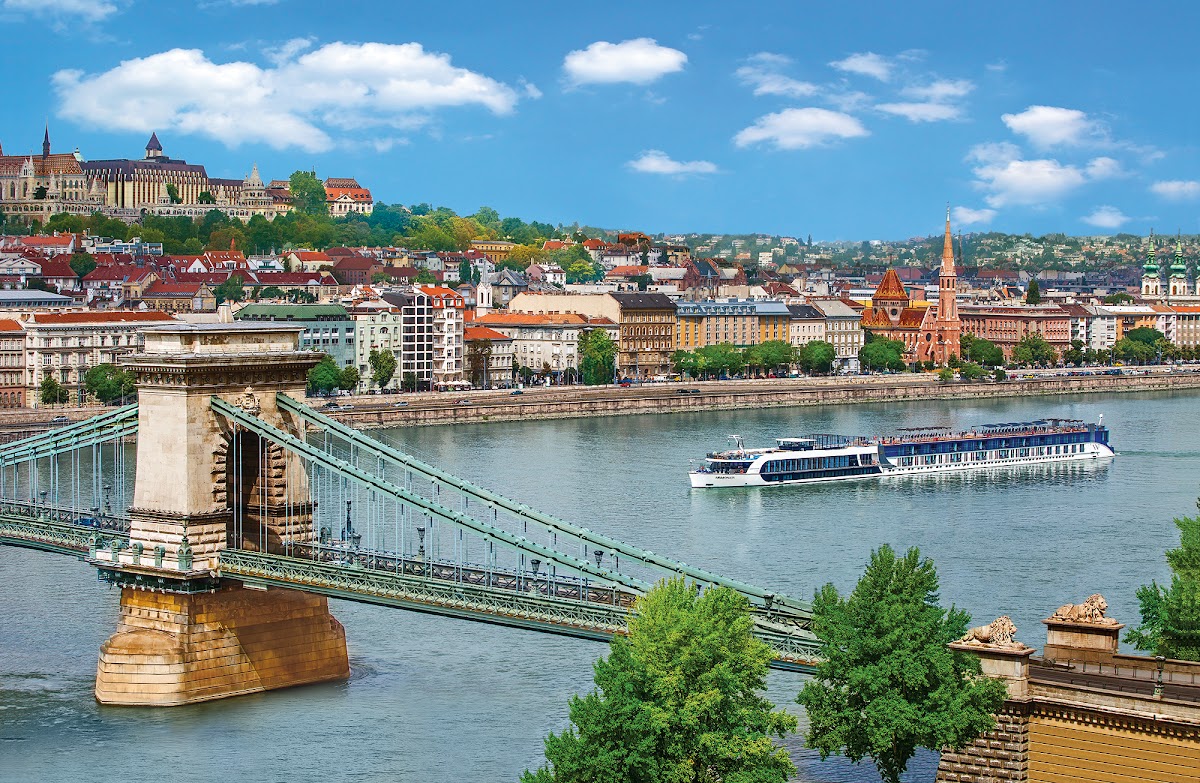
- Budapest, Hungary — the grand finale: the Parliament, Buda Castle, the Chain Bridge, and the Széchenyi thermal baths, often with a magical illuminated night sailing.
Westbound cruises frequently begin in Nuremberg instead of Passau, adding a night and the Bavarian countryside. Longer 10- to 14-night voyages continue onto the Lower Danube (see below).
The Wachau Valley: The Danube’s Scenic Heart
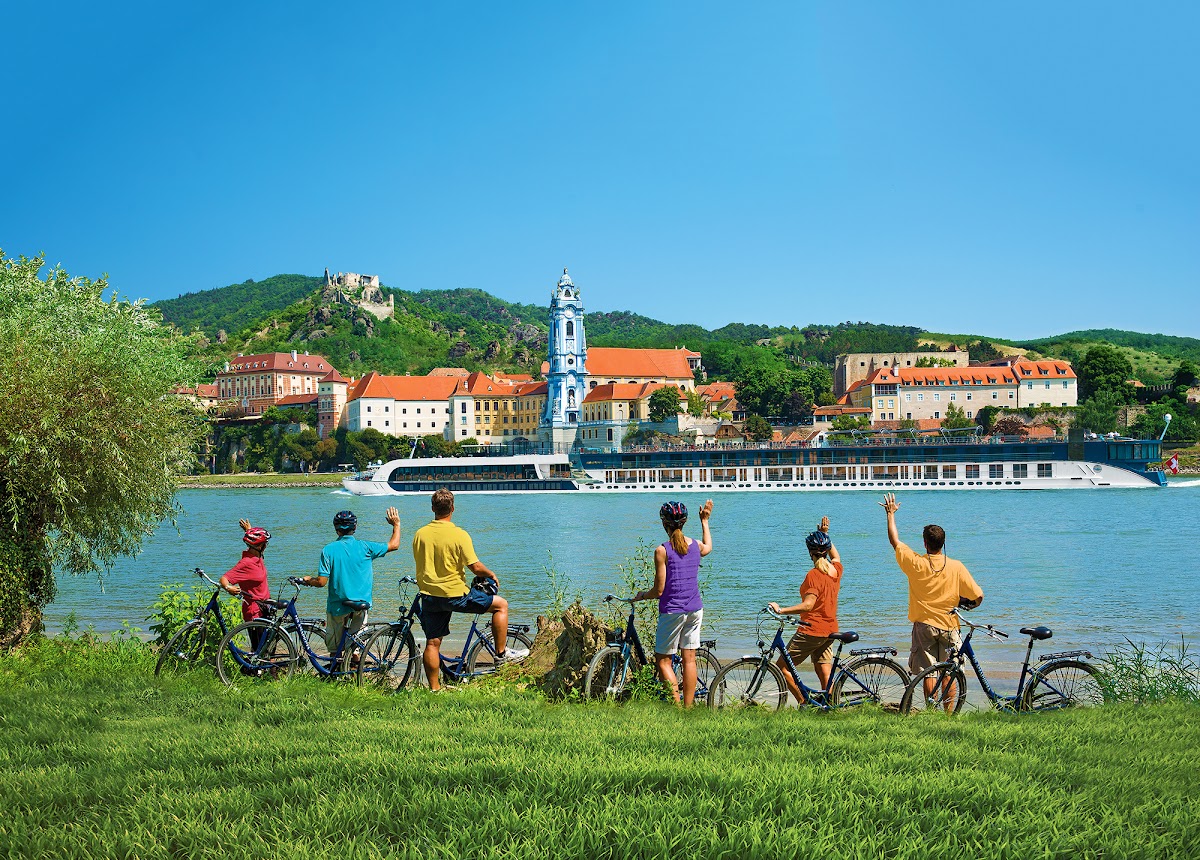
If the Danube has a signature landscape, it’s the Wachau Valley — a 36-kilometre UNESCO Cultural Landscape between Melk and Krems where terraced vineyards, apricot orchards, and ruined castles line both banks. Ships slow down to drift through it, and the highlights come thick and fast:
- Melk Abbey — a vast baroque Benedictine monastery on a granite bluff, with a library of some 100,000 volumes.
- Dürnstein — a wine village below the castle ruins where England’s King Richard the Lionheart was famously held for ransom, marked by its blue-and-white baroque church tower.
- Grüner Veltliner — Austria’s signature white wine, grown right on these slopes and poured at tastings ashore.
Vienna and Budapest: The Grand Capitals
More than any other river, the Danube is defined by its cities — and two stand above the rest. Vienna delivers Habsburg grandeur: the Schönbrunn and Belvedere palaces, the Vienna State Opera, the Kunsthistorisches Museum, and coffee houses that are institutions in their own right. Budapest is the showstopper finale — the neo-Gothic Parliament along the river, Buda Castle on the hill, the century-old Széchenyi thermal baths, and a night sailing beneath the illuminated bridges that ranks among the most beautiful moments in all of river cruising.
Which Is the Best Danube River Cruise Line?
There’s no single “best” line — it comes down to budget and style, and because the Danube is so popular you’ll have plenty of choice. The main operators split into luxury, premium, and value tiers:
| Line | Style | Good fit for |
|---|---|---|
| Uniworld | All-inclusive luxury | Boutique, richly designed ships; nearly everything included |
| Scenic | Luxury | Butler service and all-inclusive excursions |
| Tauck | Ultra-inclusive | Guided touring with tips and excursions built in |
| AmaWaterways | Premium | Standout food and wine, plus active biking/hiking options |
| Viking | Premium, adults-only | The most departures; understated Scandinavian style |
| Avalon | Premium | Panorama beds that face the view; strong value |
| Emerald | Premium value | Modern ships with a pool; good price-to-quality |
| Riviera / CroisiEurope | Value | Lower price points; escorted (Riviera) or casual French style (CroisiEurope) |
Ships and inclusions change year to year — an advisor who has sailed the Danube can match you to the right line, ship, and cabin rather than a brochure.
Best Time to Take a Danube River Cruise
The Danube’s season runs roughly April through December, and the month shapes the trip:
- Spring (April–May): Fresh and green, with blossoming orchards in the Wachau and fewer crowds.
- Summer (June–August): Warmest and liveliest, with long daylight and outdoor concerts — though occasional low-water levels can affect some late-summer sailings.
- Autumn (September–October): Wine harvest, golden vineyards, and comfortable sightseeing weather — a favorite window.
- Winter (late November–December): Christmas market season (see below).
Danube Christmas Market Cruises
From late November through December, the Danube becomes one of Europe’s premier Christmas market routes. Its markets are among the continent’s most celebrated — Vienna, with stalls in front of the City Hall; Budapest, glowing along Vörösmarty Square; and the historic market at Regensburg. Expect mulled wine, roasted chestnuts, handmade crafts, and cities dressed in lights. Days are shorter and colder, but the atmosphere is unmatched — and these are the fastest-selling sailings of the year, so book close to a year ahead.
Rhine vs. Danube: Which Should You Choose?
The Rhine and Danube are the two giants of European river cruising, and it’s the classic dilemma. In short:
- Choose the Danube for grand capital cities — Vienna and Budapest above all — plus imperial history, classical music, and the Wachau Valley.
- Choose the Rhine for castles, dramatic gorge scenery, four countries in a week, and the widest choice of sailings.
Neither is “better” — they’re different moods. Many travelers do the Rhine first and the Danube second, and some combine both into a two-week Grand European voyage.
Beyond Budapest: The Lower Danube
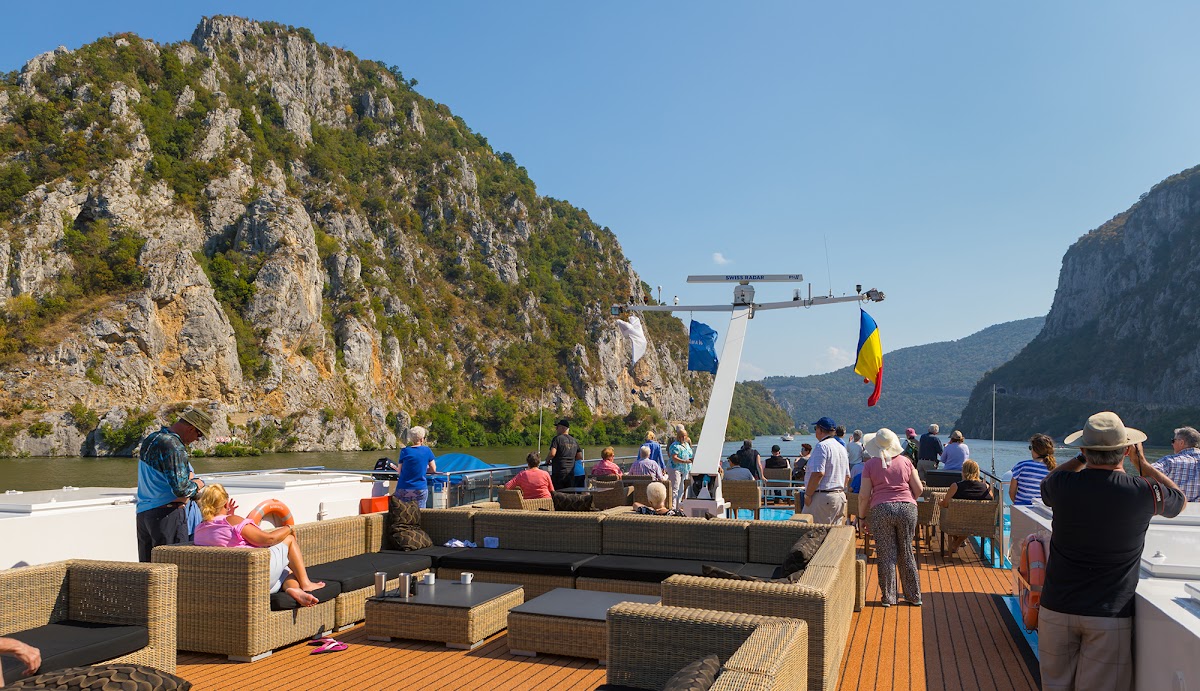
Most cruises end in Budapest, but the river keeps going. Lower Danube itineraries of 10 to 14 nights continue southeast toward the Black Sea, calling at Belgrade (Serbia), threading the dramatic Iron Gates gorge on the Serbia–Romania border, and finishing near Bucharest (Romania), with stops in Croatia and Bulgaria along the way. It’s a very different, less-traveled Danube — history-rich and wonderfully off the beaten path.
What’s Included and What Does It Cost?
Danube cruises are largely all-inclusive: your cabin, all onboard meals, most shore excursions, and Wi-Fi, with beer and wine at lunch and dinner on most lines. Luxury lines (Uniworld, Scenic, Tauck) fold in premium drinks, gratuities, and transfers; premium and value lines keep the base fare lower and sell some extras separately.
Pricing varies widely by line, cabin, and season — a value week often starts in the low-to-mid thousands per person, while a top suite on a luxury line in peak or Christmas season runs several times that. Christmas market sailings command a premium and sell out first, so booking early is the real saving. (Figures are general and change constantly; confirm current pricing before booking.)
Tips for First-Time Danube Cruisers
- Fly into Munich (for Passau/Nuremberg) or Budapest, depending on direction; add a pre- or post-cruise night in Budapest — it deserves it.
- Choose an itinerary with a Vienna overnight if you want an evening concert.
- Don’t miss the Budapest night sailing — check the daily program for timing.
- Pick your season on purpose: autumn for wine, December for markets.
- Pack layers and comfortable shoes for cobblestones and palace grounds.
Planning a Danube river cruise?
Our advisors have sailed the Danube and know which line, ship, and sailing date fits you best — at no extra cost to you.
Talk to an AdvisorDanube River Cruise FAQ
How long is a Danube river cruise?
The classic Danube cruise is seven nights between Passau and Budapest, sailed in either direction. Westbound trips often start in Nuremberg (adding a night), and Lower Danube voyages to the Black Sea run 10 to 14 nights.
Which is the best Danube river cruise line?
It depends on your budget and style. Uniworld, Scenic, and Tauck lead the luxury tier; AmaWaterways, Viking, Avalon, and Emerald sit in the premium range; Riviera and CroisiEurope offer strong value. Viking runs the most departures.
Where do Danube river cruises go?
The classic route links Passau, Germany with Budapest, Hungary, stopping in the Wachau Valley (Melk and Dürnstein), Vienna, and Bratislava — six cities across four countries. Longer sailings continue to the Black Sea.
Is the Rhine or Danube better for a river cruise?
Choose the Danube for grand capital cities like Vienna and Budapest, imperial history, and classical music; choose the Rhine for castles, gorge scenery, and four countries in a week. Both are excellent, and some travelers do both.
When is the best time to cruise the Danube?
April through October is ideal, with autumn’s wine harvest a highlight. Late November and December bring the famous Vienna and Budapest Christmas markets. Summer is warmest but can occasionally see low-water disruptions.
Do Danube cruises visit the Christmas markets?
Yes. Dedicated Christmas market sailings run from late November through December, featuring the celebrated markets of Vienna, Budapest, and Regensburg. They sell out early, so book well ahead.