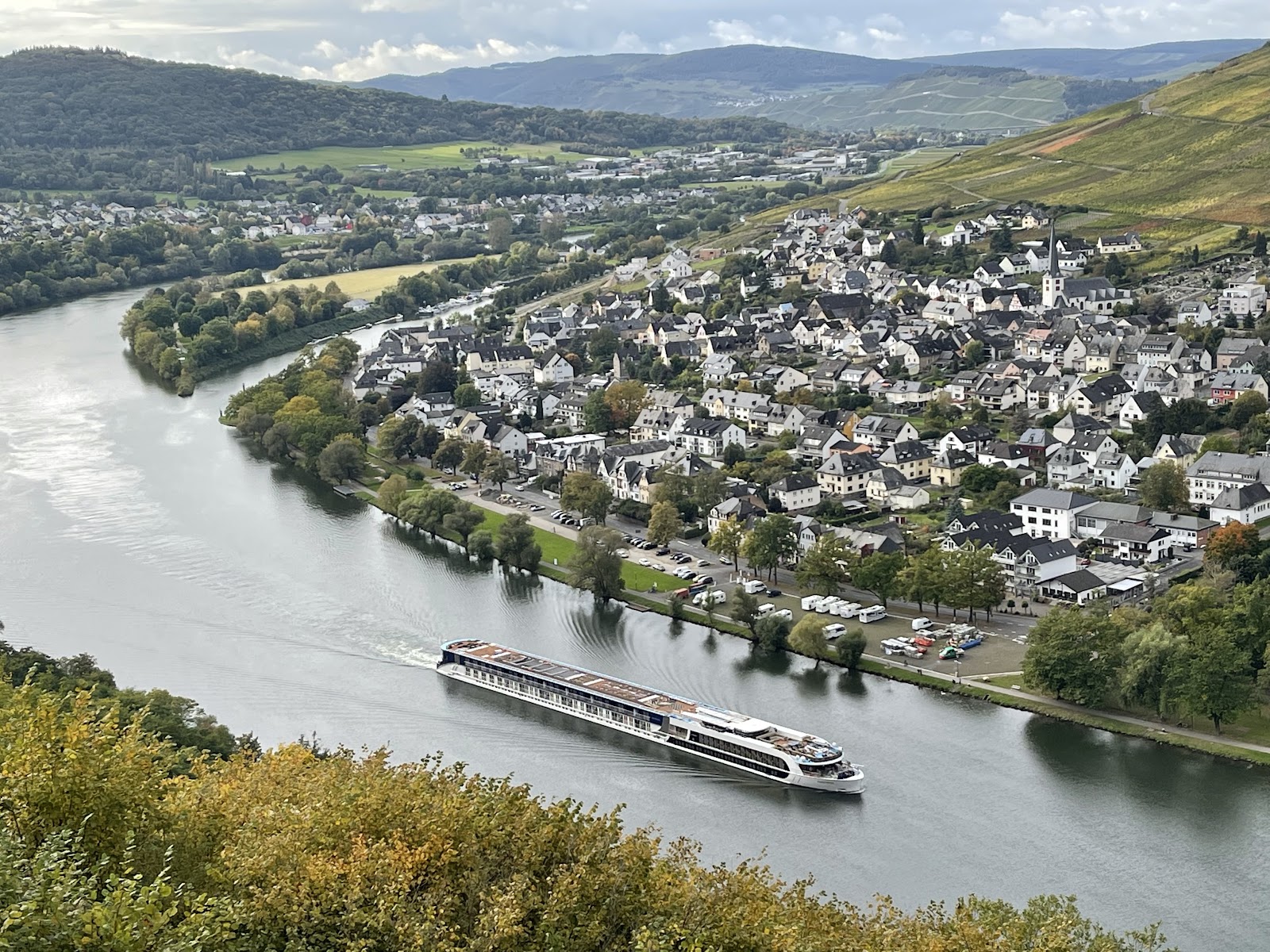
A Rhine river cruise sails through the heart of Western Europe — from Amsterdam’s canals to the Swiss city of Basel — past a near-continuous parade of hilltop castles, Gothic cathedrals, and terraced vineyards. It crosses four countries in a single week, and it’s the route most travelers picture when they imagine river cruising in Europe.
Quick answer: Rhine cruises run the classic Amsterdam–Basel route in either direction over 7 nights, crossing the Netherlands, Germany, France, and Switzerland. Every major line sails it — Viking, AmaWaterways, Uniworld, Scenic, Avalon, Emerald, and more. The scenic centerpiece is the castle-lined Rhine Gorge. Sail April–October, or late November–December for the Christmas markets.
What Is a Rhine River Cruise?
The Rhine flows some 1,230 kilometres from the Swiss Alps to the North Sea, and the stretch cruise ships use runs between Basel, Switzerland and Amsterdam, the Netherlands, threading through Germany and brushing France along the way. In a week you’ll wake up in a different country every couple of days without ever unpacking twice.
It’s the most popular river cruise in Europe — and the one most first-timers start with — because it packs so much variety into a short, easygoing week: world cities, medieval wine towns, Dutch windmills, and the single most castle-dense river valley on the continent. New to the format? Our River Cruise 101 guide covers how river cruising works; this page is all about the Rhine.
Why the Rhine Is the Best River for First-Timers
If you can only do one European river cruise, the Rhine is the safest bet. Here’s why:
- Unmatched variety. Big cities (Amsterdam, Cologne, Strasbourg), storybook wine villages, windmills, and castles — all in one itinerary.
- The castles. The Rhine Gorge delivers roughly 40 hilltop castles in a single afternoon of sailing. Nowhere else compares.
- The most choice. Every major line runs the Rhine, with more departures than any other river — so it’s the easiest route to find your dates, ship, and price.
- Easy logistics. Fly into Amsterdam or Basel/Zurich; both are simple gateways.
- Christmas markets. In late November and December, the Rhine becomes the premier route for Europe’s famous holiday markets.
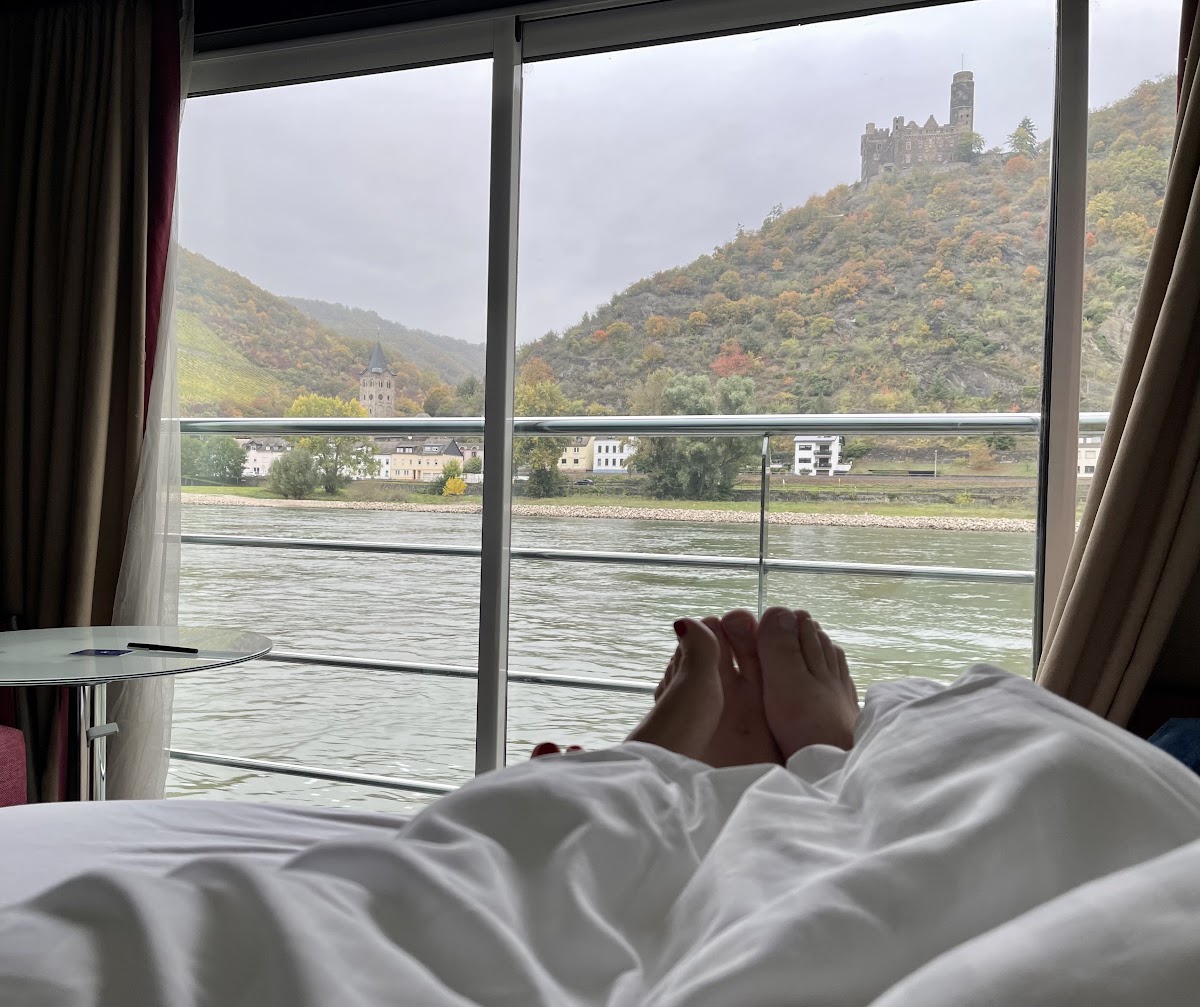
The Classic Rhine River Cruise Itinerary
The signature Rhine voyage is 7 nights between Amsterdam and Basel, sailed in either direction. A typical week looks like this:
- Amsterdam — canals, museums, and Golden Age charm. Spring sailings often add the Keukenhof tulip gardens nearby.
- Kinderdijk — a UNESCO site of 19 eighteenth-century windmills, the classic Dutch postcard.
- Cologne (Köln) — dominated by its twin-spired Gothic cathedral, one of the largest in the world.
- Koblenz — where the Rhine meets the Moselle at the Deutsches Eck, and the gateway to the gorge.
- The Rhine Gorge — the scenic highlight (more below), sailed in daylight for the castles.
- Rüdesheim — heart of the Rheingau wine region, with its lively Drosselgasse lane.
- Speyer & Heidelberg — a vast Romanesque cathedral, and an excursion to Heidelberg’s romantic ruined castle.
- Strasbourg, France — a soaring cathedral and the canal-laced Petite France quarter in Alsace.
- Breisach — the gateway to Germany’s Black Forest and to Colmar, France’s fairy-tale village.
- Basel, Switzerland — the southern terminus, with its medieval old town.
Longer itineraries of 10 to 14 nights extend into Switzerland (Lucerne, Zurich), combine the Rhine with the Moselle, or pair it with the Danube for a grand two-week crossing.
The Rhine Gorge and Its Castles
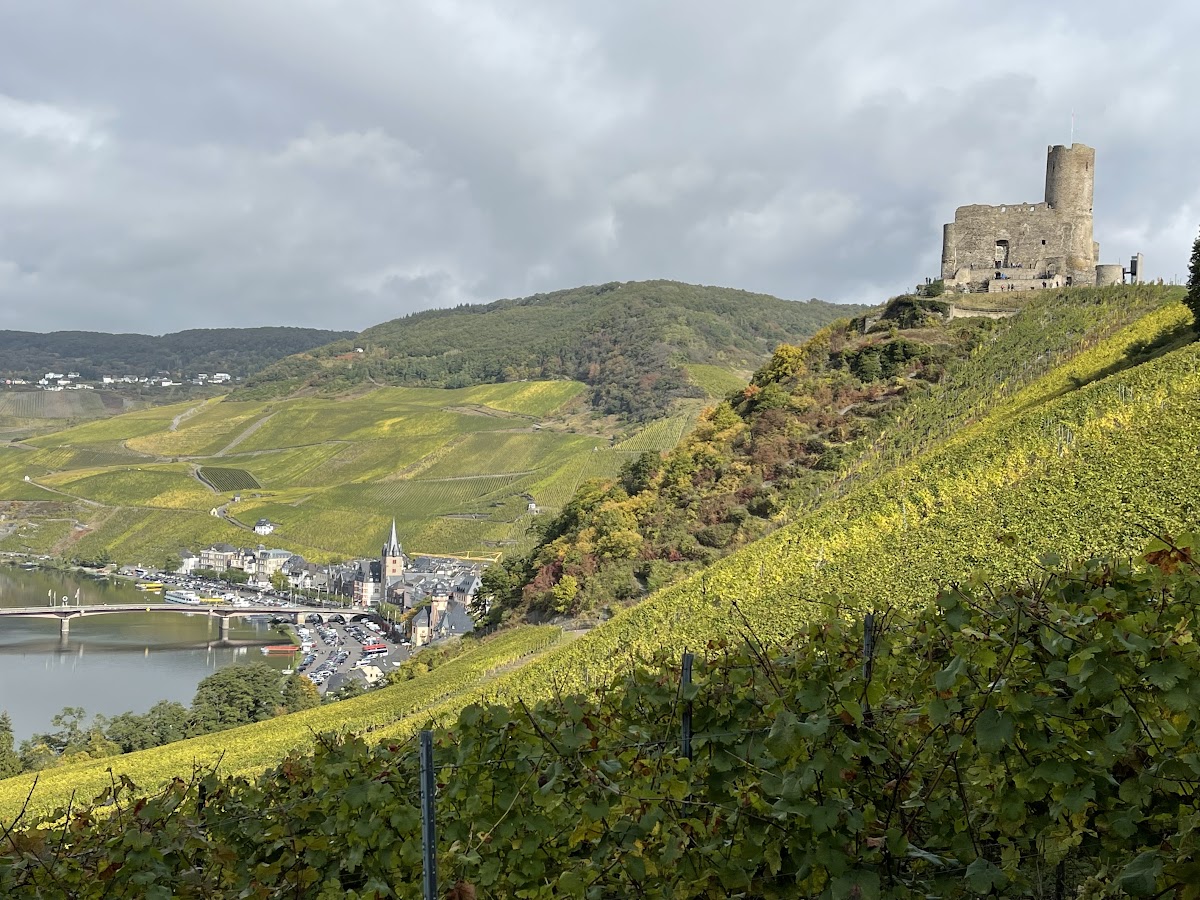
If the Rhine has a signature, it’s the Middle Rhine — the UNESCO-listed gorge between Koblenz and Bingen, about 65 kilometres of steep, vine-clad slopes crowned by some 40 castles. Ships deliberately time this stretch for daylight, and it’s the moment everyone gathers on the sun deck. Watch for:
- The Lorelei — a slate cliff over 130 metres high, wrapped in the legend of a siren who lured sailors to the rocks.
- Marksburg — the only Middle Rhine hilltop castle never destroyed, a perfect medieval fortress.
- Pfalzgrafenstein — a ship-shaped former toll castle marooned on an island mid-river.
Bring a coffee (or a Riesling) topside and let it drift by — this hour or two is why many people book the Rhine in the first place.
Which Is the Best Rhine River Cruise Line?
There’s no single “best” line — it depends on your budget and style, and because the Rhine has more sailings than any other river, you have the widest choice. The main operators split into luxury, premium, and value tiers:
| Line | Style | Good fit for |
|---|---|---|
| Uniworld | All-inclusive luxury | Boutique, richly designed ships; nearly everything included |
| Scenic | Luxury | Butler service and all-inclusive excursions |
| Tauck | Ultra-inclusive | Guided touring with tips and excursions built in |
| AmaWaterways | Premium | Standout food and wine, plus active biking/hiking options |
| Viking | Premium, adults-only | The most departures; understated Scandinavian style |
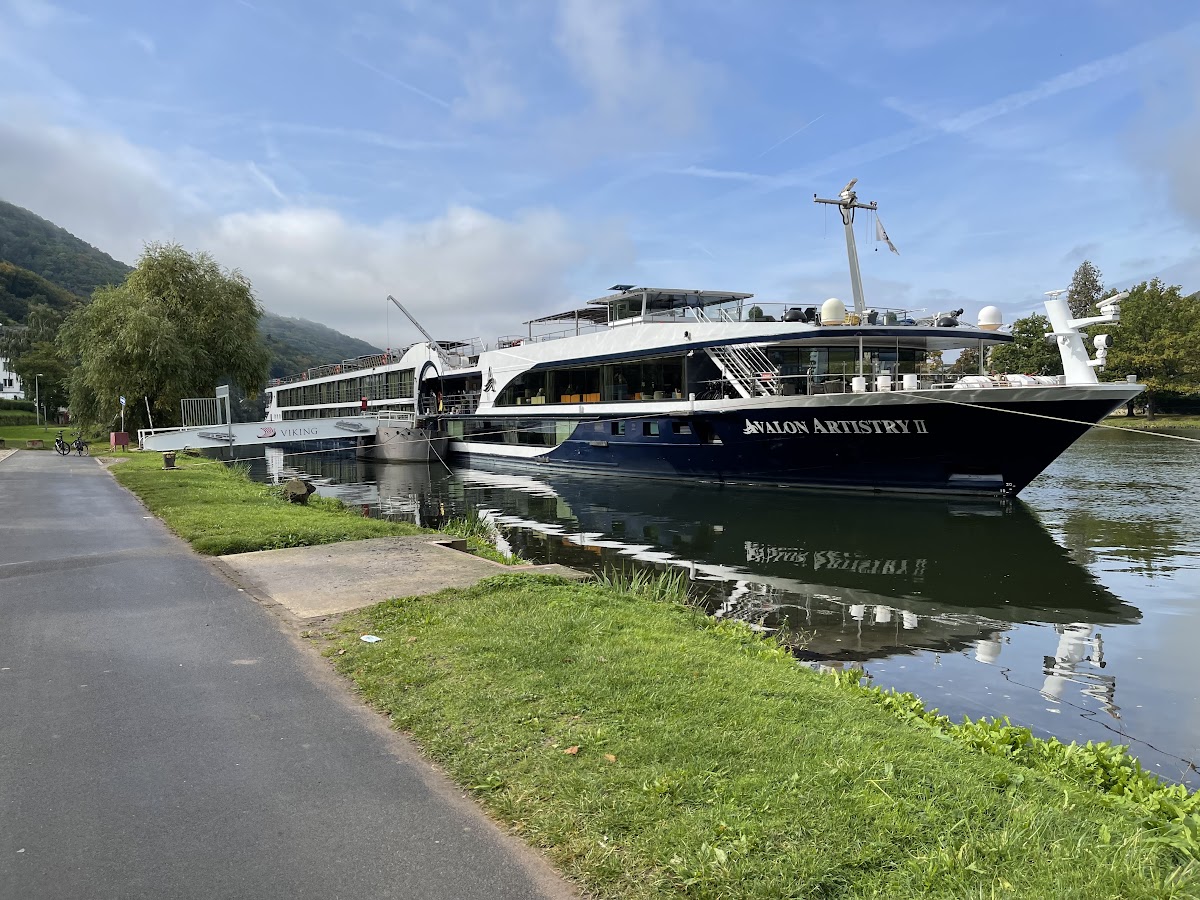
| Avalon | Premium | Panorama beds that face the view; strong value |
| Emerald | Premium value | Modern ships with a pool; good price-to-quality |
| Riviera / CroisiEurope | Value | Lower price points; escorted (Riviera) or casual French style (CroisiEurope) |
Ships and inclusions change year to year — an advisor who has sailed the Rhine can match you to the right line, ship, and cabin rather than a brochure.
Best Time to Take a Rhine River Cruise
The Rhine has a long season — roughly April through December — and the month you choose shapes the trip:
- Spring (April–May): Fresh, green, and fewer crowds. Early-to-mid April brings the Dutch tulip fields and Keukenhof into bloom near Amsterdam.
- Summer (June–August): Warmest and liveliest, with long daylight for the gorge. Watch for occasional low-water levels in late summer that can affect some sailings.
- Autumn (September–October): Wine harvest, golden vineyards, and comfortable temperatures — many specialists rank it the best window.
- Winter (late November–December): Christmas market season (see below).
Rhine Christmas Market Cruises
From late November through December, the Rhine becomes Europe’s premier Christmas market route. Sailings pause in towns whose squares fill with wooden stalls, twinkling lights, roasting chestnuts, and mugs of Glühwein (mulled wine). Standouts include Cologne, Strasbourg (billed as the “Capital of Christmas”), Rüdesheim, and Breisach. Days are shorter and colder, but the atmosphere is unmatched — and these sailings are among the first to sell out, so book close to a year ahead.
Rhine vs. Danube: Which Should You Choose?
The Rhine and Danube are the two headliners of European river cruising, and travelers often weigh one against the other. In short:
- Choose the Rhine for castles, dramatic scenery, four countries in a week, the widest choice of sailings, Christmas markets, and the easiest first-timer experience.
- Choose the Danube for grand imperial capitals — Vienna, Budapest, and Bratislava — and a more city-and-culture-focused week.
Neither is “better”; they’re different trips. If you fall in love with river cruising on the Rhine, the Danube is the natural follow-up — and some travelers combine both into a two-week voyage.
What’s Included and What Does It Cost?
Rhine cruises are largely all-inclusive: your cabin, all onboard meals, most shore excursions, and Wi-Fi, with beer and wine at lunch and dinner on most lines. Luxury lines (Uniworld, Scenic, Tauck) fold in premium drinks, gratuities, and transfers; premium and value lines keep the base fare lower and sell some extras separately.
Because the Rhine has the most sailings of any river, it also has the widest price range — a value week can start in the low thousands per person, while a top suite on a luxury line in peak season runs several times that. Christmas market and tulip-season sailings command a premium and sell out early, so the real saving is booking ahead. (Figures are general and change constantly; confirm current pricing before booking.)
Tips for First-Time Rhine Cruisers
- Fly into Amsterdam (AMS) or Basel/Zurich depending on your direction; add a pre-cruise night to explore.
- Do the Rhine Gorge from the sun deck — check the daily program for the timing and don’t miss it.
- Pick your season on purpose: April for tulips, autumn for wine, December for markets.
- Consider cabin type — a French balcony (floor-to-ceiling window) is plenty for the scenery; full balconies cost more.
- Pack layers and comfortable shoes for cobblestones and castle climbs.
Planning a Rhine river cruise?
Our advisors have sailed the Rhine and know which line, ship, and sailing date fits you best — at no extra cost to you.
Talk to an AdvisorRhine River Cruise FAQ
How long is a Rhine river cruise?
The classic Rhine cruise is seven nights between Amsterdam and Basel, sailed in either direction. Longer 10- to 14-night options extend into Switzerland, add the Moselle, or combine with the Danube.
Which is the best Rhine river cruise line?
It depends on your budget and style. Uniworld, Scenic, and Tauck lead the luxury tier; AmaWaterways, Viking, Avalon, and Emerald sit in the premium range; Riviera and CroisiEurope offer strong value. Viking runs the most departures.
What is the Rhine Gorge?
The Rhine Gorge (the Middle Rhine) is a UNESCO-listed stretch between Koblenz and Bingen lined with about 40 hilltop castles and the famous Lorelei rock. Ships sail it in daylight — it’s the scenic highlight of the trip.
Is the Rhine or Danube better for a river cruise?
Choose the Rhine for castles, scenery, four countries, Christmas markets, and first-time ease; choose the Danube for grand capital cities like Vienna and Budapest. Both are excellent, and some travelers do both.
When is the best time to cruise the Rhine?
April through October is ideal — April for the Dutch tulips, autumn for the wine harvest. Late November and December bring the Christmas markets. Summer is warmest but can occasionally see low-water disruptions.
Do Rhine cruises visit the Christmas markets?
Yes. Dedicated Christmas market sailings run from late November through December, stopping at markets in Cologne, Strasbourg, Rüdesheim, and more. They sell out early, so book well ahead.